Motorcycles have traditionally been associated with simplicity. For many riders, the appeal has always centred on the direct connection between machine, road, and rider. Yet over the past decade, motorcycles have undergone a quiet technological transformation that is changing the riding experience in significant ways.
What was once limited to high-end touring models is now becoming increasingly common across commuter bikes, adventure motorcycles, and performance machines alike. Connected dashboards, rider-assistance systems, smartphone integration, and adaptive technologies are reshaping how motorcycles are designed, used, and understood.
As manufacturers respond to changing rider expectations, modern motorcycles are beginning to resemble intelligent mobility platforms as much as mechanical machines.
Connectivity Is Becoming Standard
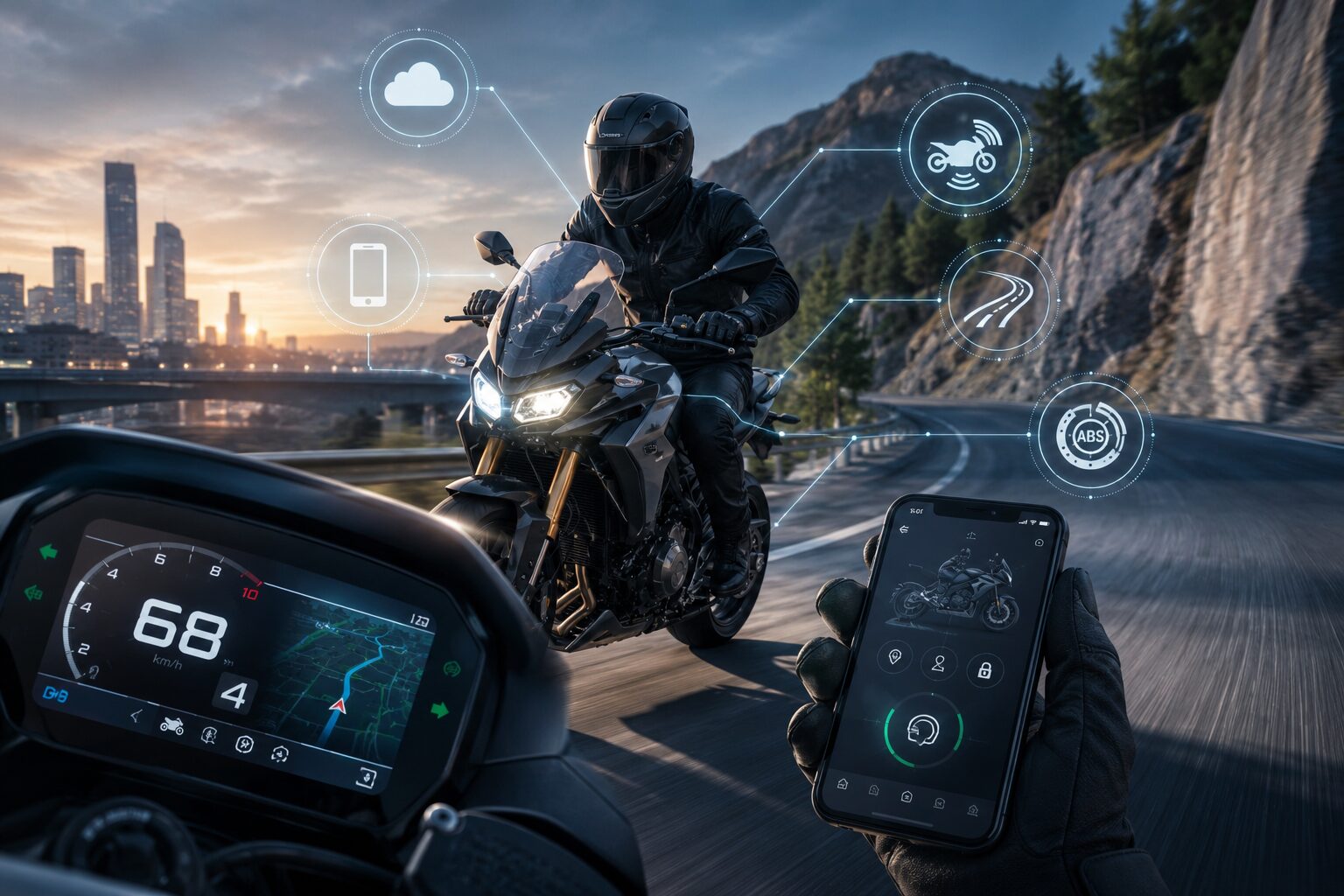
One of the biggest changes in modern motorcycling is the rise of connected technology. Digital TFT dashboards have rapidly replaced analogue gauges, bringing navigation, media controls, notifications, and real-time riding data directly into the cockpit.
For younger riders especially, seamless smartphone integration is no longer viewed as a luxury. Navigation apps, communication systems, weather updates, and ride tracking have become part of everyday riding culture. Many manufacturers now offer dedicated mobile apps that allow riders to review trip data, check vehicle diagnostics, and customise settings remotely.
This shift reflects broader consumer expectations shaped by smartphones and connected devices. Riders increasingly expect motorcycles to integrate naturally into their digital lives rather than operate separately from them.
The growing emphasis on visual customisation has also influenced motorcycle culture more broadly. Riders are paying closer attention to aesthetics, branding, and presentation, with even smaller design details becoming part of the ownership experience. For motorists focused on vehicle identity and presentation, companies like Plates Express reflect the wider demand for personalisation across modern automotive culture.
Rider Assistance Technology Is Expanding
Safety systems once reserved for premium touring bikes are now becoming common throughout the motorcycle industry. Anti-lock braking systems are now standard on many models, while traction control, cornering ABS, wheelie control, and lean-sensitive electronics are increasingly accessible even in mid-range motorcycles.
These systems are not designed to remove rider involvement. Instead, they aim to improve stability and reduce the likelihood of critical mistakes in difficult conditions.
Adaptive cruise control is one of the clearest examples of how rapidly motorcycle technology is advancing. Several manufacturers have already introduced radar-assisted systems capable of maintaining distance from surrounding traffic automatically. While still relatively new, these technologies point toward a future where motorcycles incorporate increasingly sophisticated rider support features.
For commuters, this technology can reduce fatigue during longer journeys. For enthusiasts, it allows riders to push performance more confidently while maintaining a higher level of safety.
Importantly, these systems are gradually changing perceptions around motorcycle accessibility. Riders who may once have been intimidated by powerful bikes are finding modern machines more manageable due to electronic assistance.
Software Is Now Part of Motorcycle Performance
Mechanical engineering remains central to motorcycling, but software is now playing a much larger role in how motorcycles behave on the road.
Modern ride-by-wire throttle systems allow manufacturers to create multiple riding modes that adjust throttle response, suspension behaviour, traction control, and power delivery instantly. A single motorcycle can effectively offer different personalities depending on riding conditions.
Rain mode, touring mode, urban mode, and sport mode are now common features across many categories. This flexibility allows riders to adapt their machines more easily to weather, traffic, and road conditions without modifying hardware.
Suspension systems are evolving in a similar way. Semi-active electronic suspension can automatically respond to road surfaces, braking, acceleration, and rider inputs in real time. The result is a smoother and more controlled ride that would have been difficult to achieve with traditional mechanical setups alone.
This growing reliance on software has changed how motorcycles are developed. Manufacturers increasingly view updates and digital refinement as ongoing parts of ownership rather than fixed features delivered at the point of sale.
Commuter Bikes Are Benefiting Too
While advanced technology is often associated with premium motorcycles, many innovations are filtering down into smaller and more affordable models.
Urban commuters now regularly feature Bluetooth connectivity, USB charging ports, keyless ignition, and app-based navigation support. These additions reflect how motorcycle manufacturers are responding to riders who use bikes primarily for practical daily transport rather than weekend leisure.
Electric motorcycles and scooters are accelerating this trend further. Many electric two-wheelers are designed around connected ecosystems from the outset, with integrated diagnostics, GPS tracking, anti-theft systems, and remote monitoring built into the ownership experience.
As cities continue focusing on congestion and emissions reduction, smart commuter motorcycles are likely to become increasingly important in urban mobility strategies.
The Definition of Motorcycle Enthusiasm Is Changing
Technology is also influencing motorcycle culture itself. Traditionally, enthusiast communities often focused heavily on mechanical modification and performance tuning. While those communities remain strong, modern riders are increasingly interested in software features, rider tech, connectivity, and design integration.
Helmet communication systems, action cameras, ride-sharing apps, and online communities have all contributed to a more connected riding culture. Touring routes are planned digitally, rides are documented online, and communities now form around both technology and lifestyle as much as engine specifications.
This does not mean traditional motorcycling values are disappearing. Instead, the culture is broadening. Riders still value freedom, performance, and individuality, but they are increasingly comfortable with technology playing a larger role in the experience.
In many ways, modern motorcycles are following the same trajectory as the wider automotive industry: balancing emotion and mechanical engagement with digital convenience and intelligent assistance.
A Smarter Future for Two Wheels
Motorcycles are becoming significantly more advanced, but the goal is not to replace the riding experience. Most modern technology is designed to enhance usability, improve safety, and make riding more adaptable to everyday life.
Connected dashboards, rider-assistance systems, adaptive electronics, and smartphone integration are no longer niche additions reserved for flagship models. They are steadily becoming part of mainstream motorcycle design.
As rider expectations evolve, manufacturers are increasingly building motorcycles that reflect how people live and travel today — connected, personalised, and digitally integrated.
The next generation of motorcycles may be smarter than ever before, but their core appeal remains unchanged. Riders still seek freedom, identity, and engagement with the road. Technology is simply becoming another part of how that experience is delivered.