
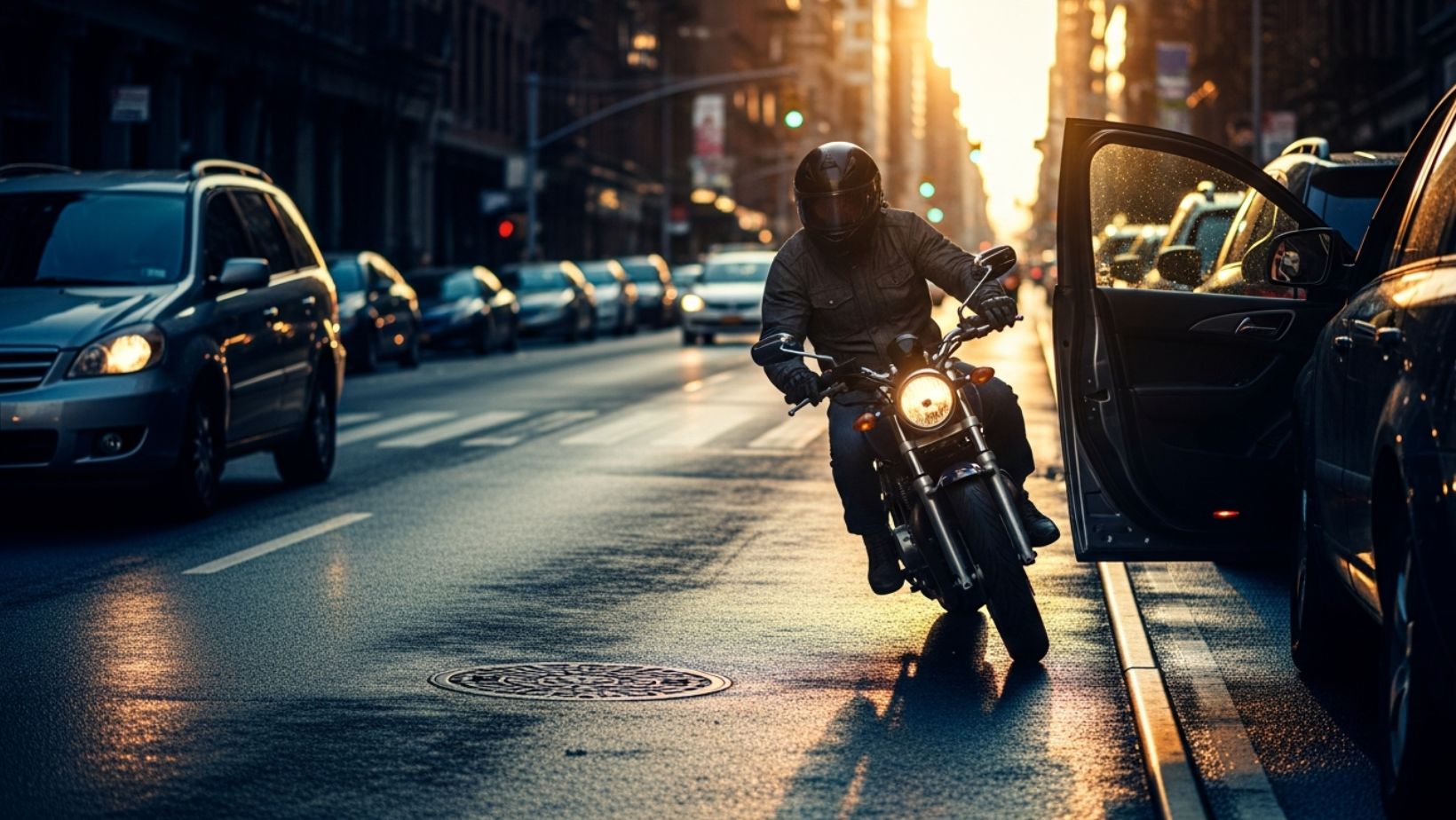
The stakes for urban motorcyclists have never been higher. According to traffic safety data, 2022 saw 6,218 motorcyclist fatalities, the highest number recorded since data collection began in 1975. While motorcycling provides an unparalleled sense of freedom and efficiency, the urban environment—a dense ecosystem of distracted drivers, complex intersections, and unpredictable hazards—presents a unique set of challenges that demand more than just basic riding skills. This guide moves beyond the fundamentals, providing a strategic framework for experienced commuters to proactively manage risk, master their environment, and understand their legal protections on city streets.
Situational Awareness: Your First Line of Defense in the Concrete Jungle
Advanced urban riding is a mental discipline focused on anticipation over reaction. It’s about seeing and being seen in a chaotic environment where threats can appear from any direction. Mastering this requires a commitment to proactive mindset shifts and advanced positioning techniques that establish a rider’s presence and control over their immediate surroundings.
The Art of Proactive Lane Positioning
Many riders default to the center of the lane, but this position is often a blind spot for cars and a collection point for oil and debris, earning it the nickname oil slick alley. Commanding a lane for visibility means using its different thirds—left, center, and right—as strategic assets. Positioning in the left third of the lane makes you more visible in a driver’s side-view mirror and prepares you for a left turn. The right third can offer a buffer from oncoming traffic. Shifting between these positions not only creates crucial space cushions but also acts as a non-verbal signal, communicating your intentions to other drivers more effectively than a turn signal alone.
Navigating Public Transit and Commercial Zones
Buses, taxis, and delivery vehicles introduce a layer of unpredictability to the urban traffic flow. These vehicles make frequent, abrupt stops, often without warning, and their large size can completely obscure pedestrians, cyclists, and other hazards. Recent trends show a sharp increase in motorcycles used for commercial deliveries, which has corresponded with a rise in related accidents, as reported by the Johannesburg Metropolitan Police Department (JMPD). Furthermore, the proliferation of e-scooters has added another unpredictable element, tragically highlighted in a fatal collision in Southeast Portland. The key is to anticipate the erratic flow around these vehicles, increase your following distance, and scan for clues like passengers preparing to exit a bus or a delivery driver looking for an address.
Lane Filtering and Splitting: Laws and Best Practices
The practice of riding between lanes of traffic is one of the most debated topics in motorcycling, with legality varying drastically by location. It’s crucial to distinguish between lane filtering—moving between lanes of slow or stopped traffic—and lane splitting, which is moving between traffic at speed. As cities grapple with congestion, the legality of these practices is a subject of ongoing legislative debate globally, with countries like Ghana and municipalities in Brazil actively developing new regulations. Riders must be experts on their local laws, as ignorance can lead to hefty fines and dangerous misunderstandings with other motorists.
| Feature | Lane Filtering | Lane Splitting |
|---|---|---|
| Definition | Riding between lanes of slow-moving or stopped traffic, typically at intersections or in congestion. | Riding between lanes of traffic moving at speed. |
| Primary Goal | Reduce congestion and improve rider safety by removing them from the rear-end collision zone. | Maintain progress in flowing traffic, often at a speed significantly different from other vehicles. |
| Common Legality | Legal or decriminalized in a growing number of jurisdictions worldwide. | Generally illegal in most of North America, with some exceptions. |
| Key Safety Tip | Maintain a low-speed differential (e.g., no more than 10-15 mph faster than traffic). Watch for sudden lane changes. | High-risk due to the reduced reaction time for both the rider and other drivers. Requires extreme skill and attention. |
Reading the Road: Proactively Identifying and Mitigating Urban Hazards
Successfully commuting in a city involves more than just managing other vehicles; it requires an active dialogue with the physical environment. Urban infrastructure, with its imperfections and unique challenges, can become a serious threat if a rider is not trained to anticipate and react to surface-level and environmental dangers before they become critical.
Surface-Level Threats: Potholes, Manhole Covers, and Road Debris
A rider must constantly scan the road surface far ahead, looking for hazards that a car might easily straddle but could be catastrophic for a motorcycle. Potholes can upset a bike’s suspension or damage a wheel, while metal manhole covers and painted road lines become incredibly slick when wet. Similarly, sewer grates with bars parallel to the direction of travel can catch a motorcycle’s front tire.

A quick swerve that is a minor event in a car requires a deliberate and controlled input on a bike. This is where the importance of well-maintained suspension and tires becomes paramount for handling road imperfections, a topic that highlights the different upkeep demands of two- and four-wheeled vehicles.
Intersections: The Highest-Risk Zones
Intersections are the most dangerous areas for motorcyclists. The foundational ‘Hurt Report’ on motorcycle safety found that failures of motorists to detect and recognize motorcycles in traffic were the predominating cause of motorcycle accidents, with intersection-related scenarios being the most common. Decades later, this finding remains tragically relevant. With distracted driving becoming a more significant issue, as evidenced by a nearly 10% rise in motorcycle fatalities in one metro area, riders must treat every intersection as a high-threat environment and follow a strict safety protocol.
- Pre-Intersection Safety Protocol:
- Reduce Speed: Approach all intersections, even with a green light, with caution and controlled speed.
- Cover Brakes: Position your fingers and foot over the brake levers to minimize reaction time.
- Scan Aggressively: Look left, right, and left again. Check for pedestrians and cars looking to turn.
- Make Eye Contact: Attempt to make eye contact with drivers, especially those waiting to turn left, but never assume they have seen you.
- Identify Escape Routes: Always have a plan B. Know where you can swerve if a car pulls out in front of you.
- Beware of Distracted Drivers: With distracted driving a growing issue, assume no one sees you and ride accordingly.
Weather and Environmental Factors
Urban settings can amplify the dangers of adverse weather. Rain doesn’t just reduce traction on asphalt; it makes painted lines, crosswalks, and manhole covers as slick as ice. High-rise buildings can create powerful and unpredictable wind tunnels that can push a motorcycle across a lane unexpectedly. Furthermore, air quality issues can present a direct threat. A recent crash on the Delhi-Gurugram highway, where a superbike collided with a cab in dense smog, serves as a stark reminder of how poor visibility can eliminate reaction time entirely, turning a simple lane change into a life-threatening event.
The Unseen Threat: Defending Against Parked Cars and Dooring Accidents
Of all the hazards unique to city riding, perhaps the most sudden and difficult to avoid is the threat posed by parked cars. An abruptly opened door can create an immovable obstacle in a rider’s path with zero warning, leading to a violent and often devastating collision.
The Anatomy of a Dooring Accident
‘Dooring’ is a violent and surprisingly common urban incident. In cities like New York, it has been identified as a significant factor in rider fatalities, accounting for at least 11% of cyclist deaths in a 2019 report.
Proactive Defense: The Door Zone Awareness Strategy
The primary defense against dooring is spatial awareness. The door zone is the 3-4 foot area adjacent to a parked car that a fully opened door will occupy. The most effective strategy is to avoid riding in this zone whenever possible by positioning your bike in the left portion of the lane, closer to the center line. This must be balanced with awareness of traffic behind you. Beyond positioning, riders should actively scan the interiors of parked cars for occupants. Look for shadows, heads in mirrors, hands on door handles, or the glow of an interior light as early indicators that a door may be about to open.
When the Unthinkable Happens: Understanding Your Rights After a Dooring Incident
Even the most vigilant rider can fall victim to a negligent driver or passenger opening a door into their path. In these moments, understanding the law is your most powerful tool. The legal principle of duty of care is critical; the person opening a vehicle door into traffic is responsible for ensuring it is safe to do so. In states like Arkansas, this is explicitly codified in law. Legal experts at Caddell Reynolds Law Firm, a leading authority on motorcycle injury claims, emphasize that Arkansas Code § 27-51-1307 places the full responsibility on the person opening a car door into traffic. They have seen firsthand how devastating these incidents can be and understand the complex arguments insurance companies use to shift blame. If you find yourself wondering if a car door opens on your motorcycle what your options are, it’s crucial to understand the law. Caddell Reynolds notes that insurance companies often try to use comparative fault arguments, claiming the rider was speeding or improperly positioned, to reduce or deny a claim. Their commitment is to help injured motorcyclists navigate these tactics and claim the full compensation they are legally entitled to, covering medical bills, lost wages, and pain and suffering. Having a specialist who
Ride Smarter, Not Harder: Owning Your Urban Commute
Mastering the urban commute is an ongoing process of skill refinement and vigilance. It requires a strategic mindset that blends the core principles of proactive awareness, deliberate lane positioning, and a deep understanding of both physical and legal hazards. By internalizing these strategies—from maintaining a buffer from parked cars to knowing the law is on your side after a dooring accident—you transform from a passive road user into an active manager of your own safety. As cities continue to evolve and implement new safety plans, such as the initiative recently approved in San Francisco, the rider’s commitment to continuous learning remains the most critical component for a safe and rewarding journey on two wheels.


