The freedom of the open road is unlike anywhere else, but safety is the most important part. Whether you’re a seasoned pro or a complete novice, your gear is your last line of defense. The attention to detail here is so respectful that many riders report their pre-ride rituals, whether checking their helmet or even performing a quick hobby like baccarat betting, help them concentrate before they hit the road. Having the appropriate gear will allow you to experience the ride with complete peace of mind.
Understanding the Main Parts of Protective Motorcycle Gear
When we say protect, we’re talking about more than just looking badass in leather. Motorcycle gear is designed to withstand two types of trauma; impact and abrasion.
Sliding happensmost frequently in street accidents. Regular denim jeans disintegrate in less than a second if pulled along asphalt at 50 mph. Good motorcycle gear uses materials such as Cordura, Kevlar, or top-shelf cowhide to make sure that the fabric holds up while you slide to a halt.
Impact Protection and Armor
Impact protection is typically provided by “armor” inserts in the shoulders, elbows, knees and back. CE-rated armor is the standard you should always be searching for.
CE Level 1: Provides reasonable protection for daily rides.
CE Level 2: Higher energy absorption, suitable for track days or very sporty touring.
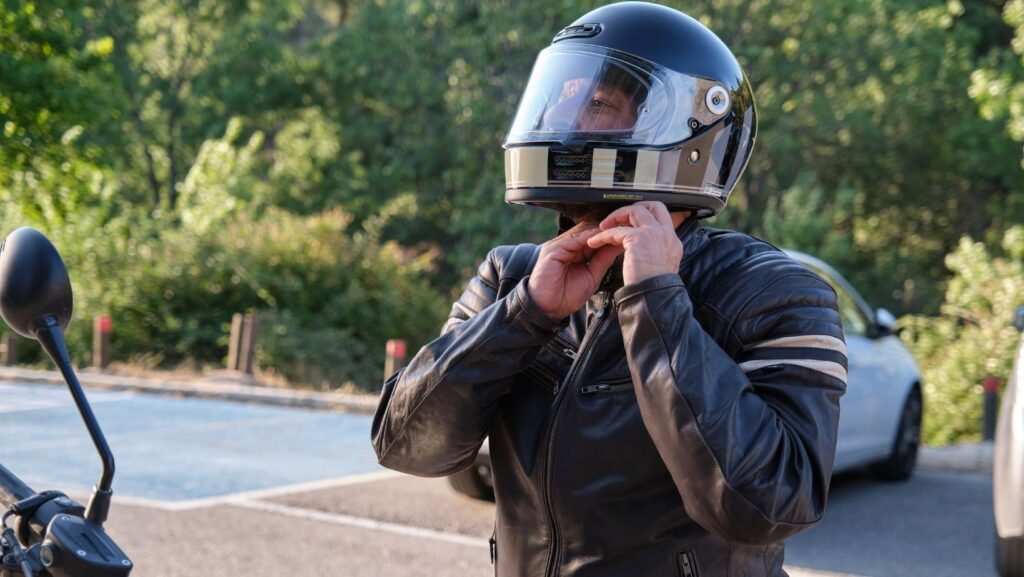
Finding the Perfect Full-Face Helmet
Your helmet is the most important part your motorcycle gear you will ever have. There are a ton of styles out there, everything from open-face to modular helmets, but the full-face is still the gold standard when it comes to safety.
Why Shell Material Matters
There are three types of materials generally used to make helmets:
Polycarbonate: Inexpensive and flexible, but typically heavier.
Fiberglass Composite: More energy absorbent and lighter than plastic.
Carbon Fiber: The strongest and lightest option, but also the most expensive.
Ensuring a Snug Fit
A loose helmet is as bad as no helmet at all. It should feel snug against your cheeks, almost as if you are “chipmunking,” and it ought to be further rotated when you shake your head. If it leaves a red mark on your forehead, it’s probably the wrong internal shape for your skull.
Jackets & Pants: Outerwear as Your Second Skin
The leather versus textile debate is an old one in the motorcycle world. And both have their place depending on where and how you ride. Leather remains the reigning champion when it comes to abrasion resistance. Over time, it adjusts and conforms to your body, providing a customized fit. But it can be heavy and doesn’t breathe well in extreme heat unless perforated.
The Versatility of Textile
Modern textile jackets are incredible. They typically feature waterproof liners and zippered vents, so for the all-weather rider, they’re the way to go. To ensure the motorcycle gear survives a slide, brands typically use Nylon from 600D to 1000D. Your arms and legs are usually the first body parts that hit the ground when you fall. You should definitely wear specialized motorcycle gear to protect your hands and feet from permanent injury.
What to Look for in Boots
Ankle Support: The boot should prevent twisting or snapping of your ankle.
Crush protection: A stiff sole is critical so that the bike does not crush your foot if it falls on you.
Shifter Pads: These are a small detail that protect your boots from wearing out in the spot where they hit the gear lever
Selecting the Right Gloves
Palms sliders should always be present in gloves. When we trip, our natural reaction is to put out our hands. Without sliders, your palm “grabs” the road, resulting in broken wrists. A palm slider enables your hand to slide, dissipating some of the shock force. If you want to take care of your investment the right way, we suggest investing in high-end motorcycle gear.
Cleaning Your Equipment
Leather: Wipe with a damp cloth and specialized leather conditioner to avoid cracking.
Textiles: Most can be hand-washed, but you have to remove the armor inserts first.
Visors: Wash with mild soap and water only. When it comes to cleaning, chemicals like Windex can destroy the anti-fog coating.
When to Replace Your Gear
Also, helmets should be replaced every five years because the EPS liner (the foam inside) loses its integrity over time. If you did crash, replace your helmet immediately.
Summary of Safety Ratings
Here instead is a bullet-point summary of what you want to see on your gear labels:
DOT (Department of Transportation): The legal minimum in the US; not bad but far from rigorous.
ECE 22.06: The newest and toughest European standard, it tests for rotational impacts.
SNELL: A voluntary racing standard under which very high-energy impact testing is performed.
CE Rating: This number will have a “motorcycle” icon on the internal tags of jackets and pants if they are indeed rated for road use.
Final Thoughts on Riding Prepared
Ultimately, the best motorcycle gear is whatever you’ll wear every time you get on the bike. Your jacket could cost you thousands but if it’s hanging in your closet when you crash, who cares? Buy equipment that fits well, that looks good to you, and comprises the same safety checks setting your required style of riding. Until then, take care and ride happy!