
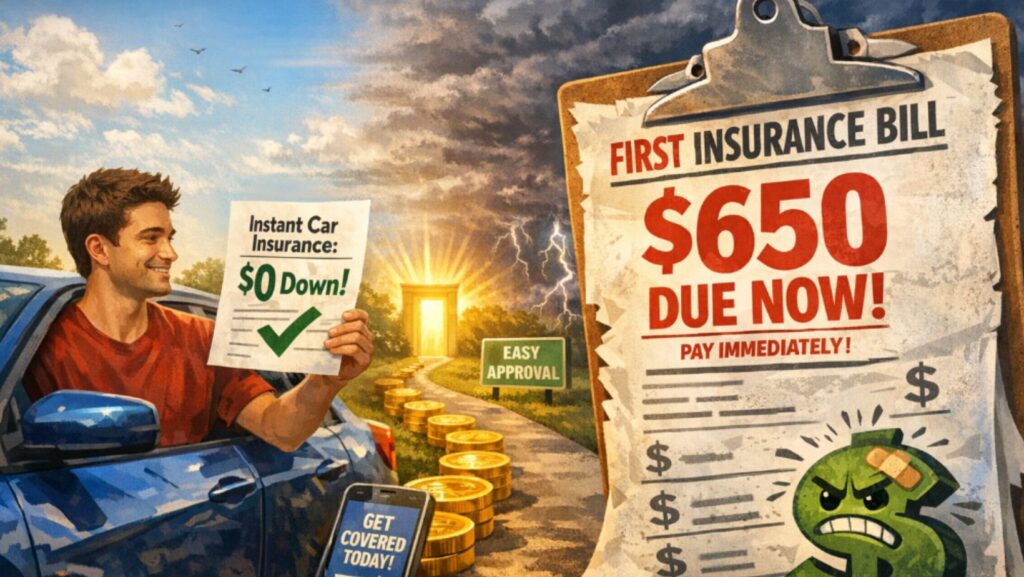
Let’s be real: that first big insurance bill can sting. You’re excited about a new (or new-to-you) ride, and then bam — you’re hit with a chunky payment just to get covered.
That’s why low-upfront or “no down” style insurance offers sound like a lifesaver. They promise coverage without the painful first punch to your wallet. Sometimes they genuinely help. Other times, the “easy start” comes with math most people don’t do until later.
I’ve spent time breaking down how these plans really work, and the truth is simple: paying less today doesn’t always mean paying less overall.
Why Low-Upfront Insurance Feels So Attractive
Low-upfront options are popular for very normal reasons — especially if you’re buying a vehicle and paying for a bunch of other costs at the same time.
- Immediate financial relief: Registration, gear, maintenance, and a new set of tires can drain savings fast. A smaller insurance start payment removes a real barrier to getting legal coverage.
- Smoother budgeting: Smaller monthly chunks can feel easier than one large upfront hit.
- Fast proof of insurance: Many of these offers come with quick online enrollment, which is useful if you need coverage the same day.
For riders, this can matter even more. New riders often face higher rates (limited experience), and the first insurance invoice can land right when you’re already spending on a helmet, jacket, gloves, and basic maintenance.
The Hidden Math Most People Skip
Here’s what often gets glossed over: low upfront just means you pay less today — not less overall.
Common trade-offs include:
- Higher monthly payments: The “missing” upfront amount typically gets baked into the monthly price.
- Installment / service fees: Some payment structures add processing or installment fees.
- It feels cheaper even when it isn’t: Small monthly numbers hide the true total. Always calculate the full-term cost.
A quick reality check: if you’re choosing a plan because the first payment is smaller, you’re basically choosing liquidity now over lower total cost later.
A Quick 6-Month Cost Example
If Plan A is $300 today + $150/month, and Plan B is $0 today + $190/month, the “no down” plan can cost more by the end — even though it felt easier to start.
To make it obvious:
| Plan Type | Upfront Payment | Monthly Payment | Term | Total Cost |
|---|---|---|---|---|
| Traditional plan | $300 | $150 | 6 months | $300 + ($150 × 5) = $1,050 |
| Low-upfront / “no down” plan | $0–$50 | $190 | 6 months | ($190 × 6) = $1,140 |
In this example, the low-upfront option saves you cash today, but costs about $90 more over the term.
That doesn’t automatically make it “bad.” It just means you should choose it for the right reason.
Who Low-Upfront Plans Are Actually For
Low-upfront insurance isn’t a scam — it’s a tool. It fits certain situations well:
- Steady income, tight savings: You trade a higher total cost for breathing room today.
- You need coverage immediately: If you must reinstate or show proof of insurance fast, it can be a practical bridge.
- Short-term needs: If you only need coverage for a short period, skipping a large upfront payment may be worth it.
The mistake is thinking “no down” automatically means “cheaper.” Often it means “easier to start.”
What “No Money Down” Usually Means (And What It Doesn’t)
Here’s the truth: “no money down” isn’t always a standardized product. Different insurers (and brokers) use it in different ways. That’s why two offers that sound identical can produce totally different totals.
In many cases, “no down payment” simply means you’re not paying a separate deposit on top of your first month. You still pay something to start coverage — often the first month’s premium — so you’re not literally starting at $0.
In other cases, it means a more flexible installment structure (weekly, bi-weekly, or monthly) where the upfront amount is smaller than usual.
If you want a clearer picture of the most common setups, here’s a quick breakdown of how no-down car insurance works.
Sometimes the day-one payment is minimal, but the carrier makes up for it through:
- higher monthly rates,
- plan fees,
- stricter payment rules (like faster cancellation if you miss a payment).
None of that automatically makes the offer “bad,” but it does mean you should judge the deal based on the term total, not the headline.
Your Smart Shopping Checklist
Use this action plan any time you’re comparing quotes — whether it’s for a car or a motorcycle:
- Shop with the TOTAL in mind: Ask for the full 6-month or 12-month premium.
- Compare more than one structure: Look at totals side-by-side, not just the first payment.
- Ask about fees: “Are there installment, service, or processing fees with this plan?”
- Recheck at renewal: If you used a low-upfront plan, revisit options at renewal — switching can save money.
The 5 Questions That Reveal the Real Price
If you ask nothing else, ask these:
- What is the total premium for the full term (6 or 12 months)?
- Is the first payment the first month, a deposit, or both?
- Are there installment, service, or processing fees? How much in total?
- What happens if I’m late once — fees, grace period, or cancellation?
- Is the price tied to autopay, paperless billing, or other conditions?
If a quote can’t answer these clearly, that’s a signal to keep shopping.
FAQ: Low-Upfront and No-Down Insurance
Is “no down payment” the same as “cheap insurance”?
Not necessarily. It often changes how you pay, not how much you pay overall. Always check the full-term total.
Can I really start a policy with $0?
Sometimes, but many offers mean “no separate deposit.” You may still owe the first month’s premium or small fees to activate coverage.
Does a low-upfront plan reduce my coverage?
Coverage can be identical. The difference is usually pricing structure, fees, and payment terms — not the protection itself.
Are these plans good for new riders or high-risk drivers?
They can help when upfront cash is tight, but higher-risk quotes already run expensive, so totals can climb quickly. Comparing term totals matters even more.
Can I switch later to reduce my cost?
Yes. Many people use a low-upfront plan to get legal fast, then switch at renewal after saving for a more traditional payment structure.
The Bottom Line
Low-upfront insurance is best viewed as a budgeting tool, not a discount. In many cases, you’re paying a bit extra for the convenience of spreading the upfront cost into smaller monthly payments.
The key is simple: ignore the hype, do the math, and choose what fits your budget today and your total cost over time.


