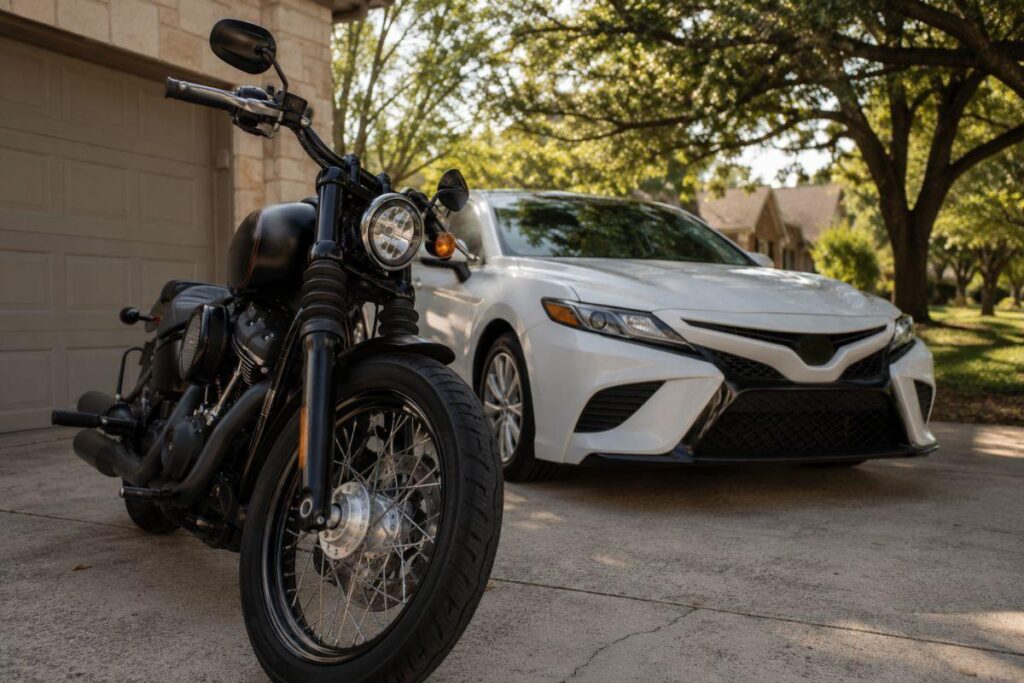
Car insurance and motorcycle insurance are two separate contracts built around two very different types of risk. Your car insurance policy is priced and structured for four-wheeled, enclosed vehicles. A motorcycle doesn’t fit that mold, and no insurer in Texas will pretend it does. The practical move is to buy a dedicated motorcycle policy, and most carriers let you bundle it with your auto insurance in Austin for a discount.
Why Motorcycles Need a Separate Insurance Policy
This comes down to how differently motorcycles and cars behave on the road. A car weighs roughly 4,000 pounds. A motorcycle weighs 400 to 600. That weight gap changes everything about how insurers calculate risk.
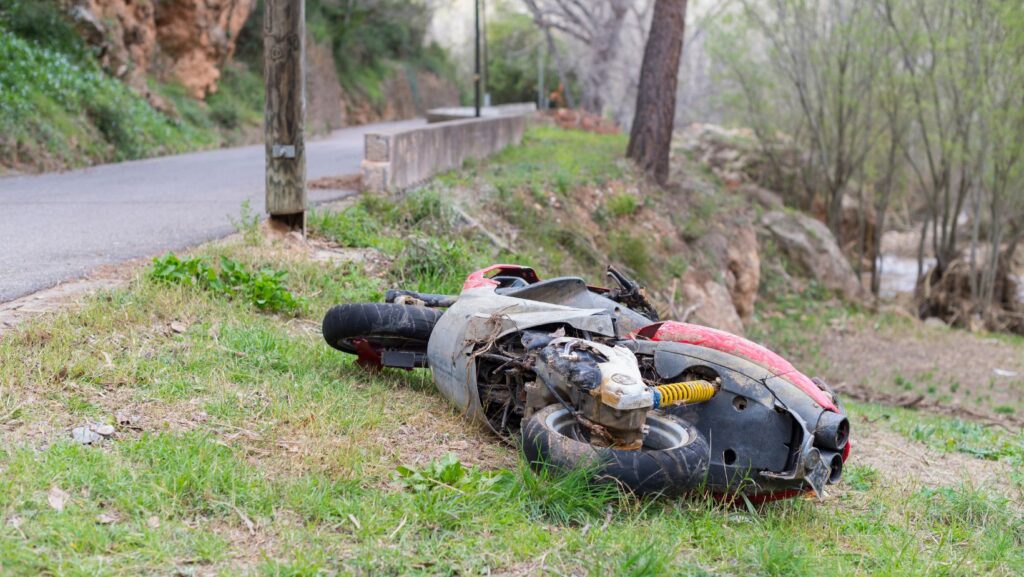
NHTSA data from 2024 tells the story clearly. Motorcyclists were 27 times more likely to die in a crash than passenger car occupants per 100 million vehicle miles traveled. Texas recorded 583 motorcycle fatalities that same year, second only to Florida. Motorcycles made up just 3% of all registered vehicles nationwide but accounted for over 16% of all traffic deaths.
Those numbers aren’t meant to scare you off riding. They explain why insurers treat motorcycles as a completely different risk category. The injury patterns are different. The liability exposure is different. The type of damage in a collision is different. Auto insurance underwriters build policies around fender benders and rear-end collisions, not the kind of high-severity injuries that happen when a rider hits pavement at 45 mph with nothing between them and the road.
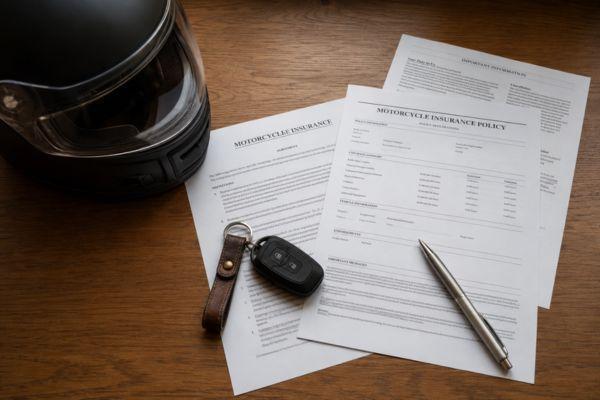
What Does Motorcycle Insurance Cover in Texas?
Motorcycle insurance and car insurance share the same basic coverage categories, but the details aren’t identical.
Both policies include liability coverage, which pays for injuries and property damage you cause to someone else. Both offer collision (covers damage to your own vehicle after a crash) and comprehensive (covers theft, vandalism, weather damage). Both can include medical payments and uninsured/underinsured motorist protection.
Where motorcycle policies differ is in what they add. Riders can usually tack on coverage for custom parts and accessories, which matters if you’ve put aftermarket exhaust, saddlebags, or chrome on your bike. Standard auto policies don’t cover aftermarket motorcycle equipment because they were never designed to. Some motorcycle policies also offer coverage for riding gear (helmets, jackets, boots) damaged in a covered accident.
One thing most riders miss: uninsured/underinsured motorist coverage (UM/UIM) matters more on a motorcycle than in a car. If someone without insurance hits you while you’re on a bike, the medical bills can climb fast. Texas minimum liability limits (we’ll get to those) won’t come close to covering a serious motorcycle injury. Your local insurance agency in Austin can walk you through which add-ons make sense for your riding habits and your bike.

Can You Bundle Motorcycle and Car Insurance?
Bundling is the closest thing to “adding your motorcycle to your car insurance.” It doesn’t put both vehicles on the same policy, but it does put both policies with the same carrier, and most insurers reward that with a multi-policy discount. Industry data shows bundling typically saves riders 5% to 10% on the motorcycle portion of their coverage.
Bundling also makes your life simpler. One carrier, one login, one bill cycle, one agent who knows your full picture. If you need to file a claim, you’re not bouncing between two different companies trying to figure out which policy applies to what.
It’s important to note that bundling isn’t always the cheapest option. Get a bundled quote from your current auto carrier, get a standalone motorcycle quote from at least one other source, and then compare totals. The math should make the decision, not convenience. If you already carry personal insurance coverage for your home or renters policy, adding a motorcycle policy to that bundle might stack even more savings.
Texas Motorcycle Insurance Requirements for 2026
Texas treats motorcycles the same as cars when it comes to minimum liability. The Texas Department of Insurance requires 30/60/25 coverage: $30,000 for bodily injury per person, $60,000 for bodily injury per accident, and $25,000 for property damage per accident.
A serious motorcycle accident in Austin can blow past those minimums before you leave the ER. If you cause a crash that puts someone in the ICU, $30,000 in bodily injury coverage won’t even cover the first round of surgeries. You’d be personally on the hook for everything above your policy limit, and in Texas, that means your savings, your assets, and your future wages are all fair game.
A new Texas law taking effect in 2026 now requires insurers to provide written explanations any time they deny, cancel, or don’t renew a policy. That’s a transparency win for riders. If your carrier drops you or jacks up your rate, they have to tell you exactly why in writing. The Texas Department of Insurance is also collecting ZIP code-level data from insurers quarterly, which should make it easier to spot pricing patterns over time.
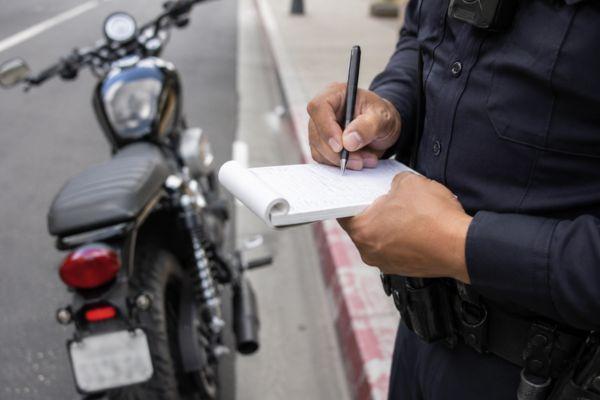
What Happens If You Ride Without Coverage?
Don’t. Riding without motorcycle insurance in Texas is a misdemeanor. A first offense carries fines, and repeat offenses bring higher penalties plus potential license suspension. Texas also runs TexasSure, an electronic verification system that checks insurance status. If your motorcycle shows up uninsured, you’ll hear about it.
Beyond the legal risk, riding uninsured is a financial gamble that doesn’t pay off. One at-fault accident, and you’re personally responsible for every dollar of the other person’s medical bills and property damage. That can mean tens of thousands (or more) out of your own pocket. If you ride in Austin, get covered. An agent who understands motorcycle insurance in Austin can help you find the right policy without the runaround.
Get Your Motorcycle Covered the Right Way
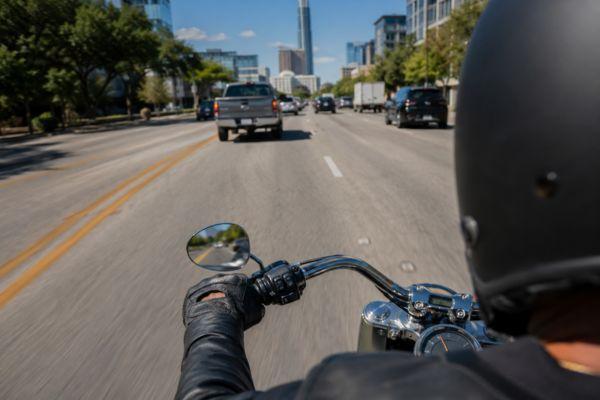
The smartest thing any Austin rider can do is get a separate motorcycle policy, bundle it with their auto coverage, and make sure their limits actually match the risks they face on the road. If you’re not sure where to start, working with a team that understands your coverage needs can make the process a lot less painful.
Frequently Asked Questions
Can I add my motorcycle to my car insurance policy in Texas?
Texas insurers don’t allow motorcycles on a standard auto policy. Motorcycles carry a different risk profile than cars, so they require a standalone motorcycle insurance policy. You can bundle both policies with the same carrier for a multi-policy discount, but they remain separate contracts.
Does my car insurance cover me if I borrow someone’s motorcycle?
Your car insurance policy is tied to four-wheeled vehicles, not motorcycles. If you borrow a friend’s bike and get into an accident, their motorcycle policy (if they have one) would be the primary coverage. Riding any motorcycle without a motorcycle-specific policy in place is a significant financial risk.
What’s the minimum motorcycle insurance required in Texas?
Texas requires 30/60/25 liability coverage for motorcycles, the same minimums as cars. That’s $30,000 per person for bodily injury, $60,000 per accident, and $25,000 for property damage. Mopeds and motor-driven cycles also require this same minimum coverage under Texas Department of Insurance rules.
Does bundling motorcycle and car insurance actually save money?
Most carriers offer a 5% to 10% multi-policy discount when you bundle auto and motorcycle policies together. But bundling isn’t always the cheapest total option. In some cases, getting the best standalone rate from two different carriers beats the bundled price. Always compare both scenarios before committing.
What does motorcycle insurance cover that car insurance doesn’t?
Motorcycle policies can include coverage for custom parts, aftermarket accessories, and riding gear (helmets, jackets, boots). Standard auto policies don’t cover any of those items. Motorcycle policies also account for the higher injury severity that riders face compared to enclosed vehicle occupants.
Is minimum liability enough for motorcycle riders in Austin?
Texas minimum limits of 30/60/25 can be exhausted quickly in a serious crash. NHTSA data shows motorcyclists faced a fatality rate 27 times higher than car occupants in 2024, and injury costs often run well into six figures. Most insurance professionals recommend carrying limits well above the state minimum.
What happens if I ride my motorcycle without insurance in Texas?
Riding uninsured is a misdemeanor in Texas. First-offense fines apply, and repeat violations can lead to higher penalties and license suspension. Texas also uses the TexasSure electronic verification system to flag uninsured vehicles, so gaps in coverage get caught quickly.