
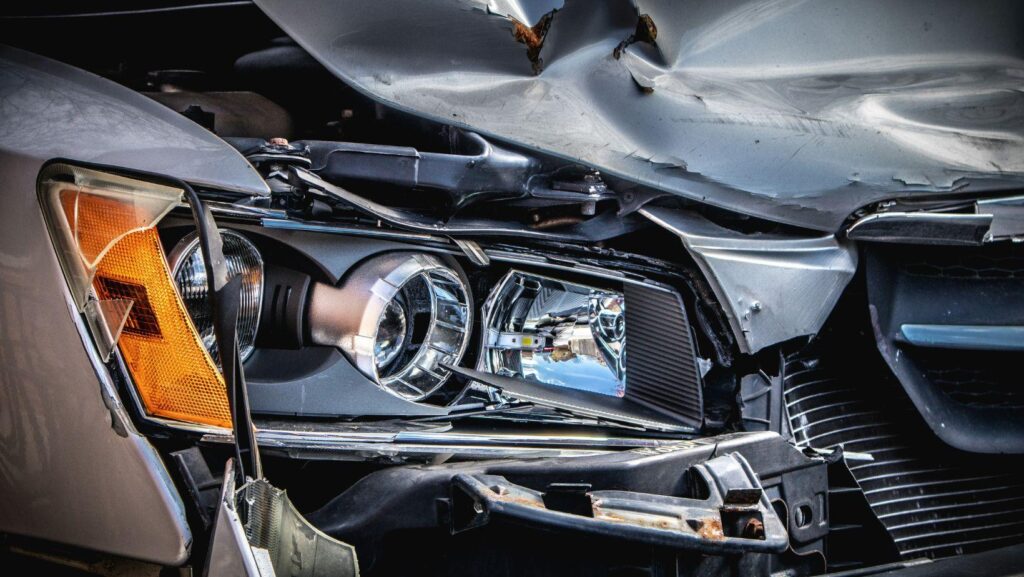
Getting hit from behind is one of the most common crashes on the road.
Most of the time when someone rear ends you, they are responsible. However, that doesn’t always make your case clear cut.
Here’s the truth:
Safety features inside your car – and how they performed in the crash – can help or harm your injury claim. Seat belts, airbags, headrests and your seat position can all affect the burden of proof.
Answer this question incorrectly and the insurance company will use it against you. Answer it correctly and you can walk into any settlement knowing you have a legit case.
Here’s a summary of how protective equipment factors into your claim and when to contact a rear-end collision attorney.
Let’s jump in!
In this guide:
- Why Protective Equipment Matters After a Crash
- The Burden of Proof Explained Simply
- How Safety Gear Affects Your Injury Claim
- When To Bring In A Rear-End Collision Lawyer
- Protective Equipment That Strengthens Your Case
Why Protective Equipment Matters After a Crash
Seat belts and airbags are your first line of defense in a car accident. They are also the first thing an insurance company will examine during a claims payout.
Why?
Safety equipment matters because it changes your injuries. The NHTSA says seat belts prevented almost 15,000 deaths just last year. That statistic should prove just how much safety gear can alter a crash.
Were you wearing your seat belt? If yes, your injuries typically match up with your impact. But if you weren’t wearing a seat belt, things get complicated quickly. That’s why having the help of an experienced car accident law firm is so crucial. An experienced rear end collision lawyer will know how to introduce evidence of protective equipment without diverting blame to you for not using seat belts or other safety devices.
Most drivers don’t think about rear-end crashes much, but they’re actually quite frequent. One recent industry study discovered automatic emergency braking cuts rear-end crashes in half, highlighting how much protective technology affects these collisions.
The Burden of Proof Explained Simply
The burden of proof is a legal way of saying:
Whoever makes the claim needs to prove it.
In a rear end collision, that burden typically rests with the individual filing the injury claim – typically the driver who was struck. You must prove:
- The other driver was negligent
- Their negligence caused the crash
- The crash caused your injuries
- Your damages are worth what you are asking for
Sounds simple, right? It’s not. And here’s where protective equipment comes into play.
The insurance adjuster wants to find any way to pay you less. If your seat belt was not clicked… Or your headrest was not adjusted properly… They will try to place SOME responsibility on you.
That’s called “comparative negligence” and it can seriously lower your final settlement.
How Safety Gear Affects Your Injury Claim
Safety gear plays two roles in your case.
There are two reasons why avoiding further injury is important after an accident.
Firstly, it lessens the impact of your injuries. Obviously that’s good for you, but it also decreases the value of your claim.
Secondly, it helps prove that you were doing your part to be safe. That’s important when the insurance company says your injuries are worse because of your own actions.
These are the standard categories of protective gear discussed in rear impact cases:
- Seat belts — proves you were restrained during impact
- Airbags — shows the crash was serious enough for deployment
- Headrests — critical for whiplash cases
- Child car seats — needed if kids were in the vehicle
- Anti-lock brakes and AEB systems — helps prove the other driver’s fault
Each of these will help or hurt your argument depending on their implementation.
Did You Know: Whiplash is the most frequent injury suffered in a rear-impact collision and a properly adjusted headrest can be the difference between a minor claim and a life altering injury.
When To Bring In A Rear-End Collision Lawyer
You don’t necessarily need an attorney for every rear-end collision. However, if you have significant injuries, a contested claim or the insurance company is being difficult… You do need one.
A rear-end collision lawyer will:
- Handle communication with the insurance company
- Gather crash reports and medical records
- Interview witnesses
- Investigate the protective equipment used in the crash
- Negotiate a fair settlement (or take the case to court if needed)
The sooner a lawyer is involved, the stronger your case will be. Evidence is lost quickly following an accident — cars are fixed, witnesses’ memories fade, and insurance companies are building their case from day one.
Having an attorney in your corner from the beginning means you have someone fighting for you from day one. Not weeks/months later.
Protective Equipment That Strengthens Your Case
Certain pieces of evidence carry more weight than others.
Dash cams are becoming one of the most useful pieces of evidence in any car accident case. Video footage of the collision removes nearly all uncertainty regarding fault. If your vehicle is equipped with one — save that footage.
Event Data Recorders (EDRs) — also known as your vehicle’s “black box” — capture information such as speed, brake usage, and seat belt status in the moments before a crash. This information can be retrieved and used as evidence.
Automatic emergency braking is just one example of vehicle safety features that demonstrate the other driver had every opportunity to avoid the collision and didn’t.
Remember all of this can also work against you. Which is why documentation after the crash – along with retaining a rear end collision lawyer ASAP – is so crucial.
The Bottom Line
Safety gear doesn’t just protect you during an accident. It also helps establish what happened, who was liable, and the extent of your injuries. If all of those factors line up correctly, you have a strong claim. If not, the insurance company has all the advantage.
To recap:
- Protective equipment affects both your safety and your injury claim
- The burden of proof falls on the injured driver
- Seat belts, airbags, headrests and EDR data all matter
- A rear-end collision lawyer helps you gather and present that evidence
- Early legal help is the key to a strong claim
Tailpipe accidents occur daily; however, they don’t always result in equitable resolutions. One of the best ways to help swing things in your favor is by having your protective gear covered correctly.