
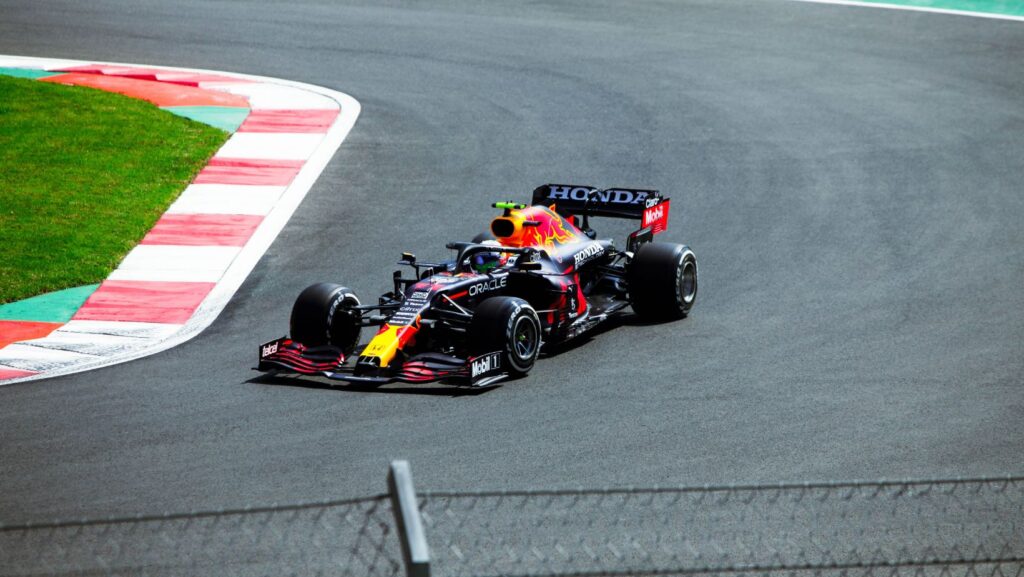
One championship, very different tests
A Formula 1 car is never simply fast or slow. It is fast under particular conditions. Barcelona can flatter a car that feels planted in long corners. Take that same package to Monaco, and the bumps and kerbs may expose every weakness. Monza poses a different problem again: straight-line speed is vital there, yet a car built around it can give time back through Suzuka’s opening sequence. The drivers have not suddenly forgotten how to drive, and the cars have not been rebuilt from scratch. The track has simply changed what counts as a strength. The circuit asks a new set of questions.
Corner Speed Changes The Compromise
Engineers sort corners into low, medium, and high-speed groups for a practical reason: each one asks something different of the car. In a tight bend, the driver needs the front to turn and the rear tires to find grip on the way out. A sweeping fast corner is another sort of test. There, confidence comes from downforce and a car that does not move around when the load builds. A circuit with several long, loaded corners may favor a car that protects its tires, whereas repeated stop-start sections can reward strong braking and acceleration.
Straights Are Not Free Speed
Reducing wing angle can lower drag and raise top speed, but the car then produces less downforce in the corners. Engineers therefore chase the quickest lap, not the largest number on the speed trap. A long straight before a genuine overtaking zone may justify a lower-drag setup. Elsewhere, the lap time gained through a technical middle sector can be worth more than a few kilometers per hour at the end of the straight.
Surface, Curbs, and Wind Matter
Track asphalt varies in roughness and grip. Newer, smoother surfaces can be gentle on tires but difficult to warm; abrasive asphalt may create grip while accelerating degradation. Tall curbs also demand compliance from the suspension and floor. Wind direction adds another variable because a headwind increases effective airflow on one part of the lap, and a tailwind can make braking or turn-in less secure. These details often explain a Friday surprise better than a headline about raw pace.
Reading the weekend
The useful clues arrive in stages. Practice shows fuel-corrected long-run pace only imperfectly because teams use different programs. Qualifying reveals one-lap performance, yet parc ferme rules limit later changes. Our weekly link to our weekly motor-racing roundup helps place race results beside tire choices, incidents, and strategy rather than treating the finishing order as a complete technical verdict.
From circuit profile to expectation
Before comparing drivers, map the venue: corner-speed distribution, straight length, overtaking points, surface, and likely weather. Then ask which teams have recently been strong in those conditions. The same discipline is useful when viewing F1 betting, where the circuit profile should be one input among practice data, reliability, penalties, and starting position. It is context, not a guarantee.
Why updates can reshuffle the field
An upgrade rarely improves every circuit equally. A revised floor might make a car more stable in fast corners but do little for traction out of hairpins. Ride-height sensitivity can also determine whether a package works on a smooth permanent circuit or a bumpy street track. Even a successful development may therefore appear inconsistent until several contrasting venues have tested it.
Weather Can Rewrite the Same Circuit
Weather can undo a tidy set-up plan in an afternoon. On a cool day, some cars struggle to switch the tires on; in hotter conditions, keeping them alive becomes the problem. Rain sends drivers looking for grip away from the usual racing line. At a high-altitude venue, the thinner air changes how the car produces downforce and sheds heat. Session times matter as well. Qualifying in late sunshine may tell teams only so much about a race held after dark, which is why forecasts are useful guides rather than promises.
Driver Confidence Completes the Package
Set-up data ultimately passes through a human being. Drivers do not all want the same feeling from a car. One may accept a lively rear end because it helps the nose bite into a corner. His teammate might be quicker with a calmer platform that lets him build a rhythm. That preference becomes especially important on a street circuit, where a small slide can end against a barrier instead of disappearing into a wide strip of run-off. When teammates diverge, compare their setups, traffic, and lap execution before deciding that the circuit simply favors one driver.
A Better Way to Compare Tracks
Use sector times and speed traces alongside the final classification. Separate qualifying from race pace, and note whether traffic or tire age distorted a lap. Formula 1’s technical explanation of why Paul Ricard tests a complete car is a useful example of circuit analysis because it connects layout, surface, and setup demands instead of relying on a single label such as ‘high downforce.’ The competitive order is easier to understand once the circuit is treated as part of the machine.
The Practical Takeaway
The calendar is a sequence of engineering examinations. Teams bring the same broad car, but every venue changes the weighting of aerodynamic efficiency, mechanical grip, braking, tire control, and driver confidence. Expect movement between closely matched teams. When a result looks strange, begin with the shape and condition of the circuit before assuming that an entire season’s form has suddenly disappeared.
A final check
A final comparison works best when two circuits ask opposite questions. Put a low-drag venue beside a high-downforce one and list which teams gained or lost in qualifying, race pace, and tire life. Repeat the exercise after an upgrade. Patterns that survive several comparisons deserve attention; one-off results should remain provisional.


