Riding a motorcycle is one of the most exhilarating ways to travel. The sense of freedom you feel out there is like nothing else. But it’s important to never forget the potential dangers involved either.
Here’s the hard truth…
Motorcycle riding is inherently riskier than driving a car. The human body is simply not designed to take that kind of impact. Riders are exposed to a variety of perils that four-wheeled drivers just don’t face. The moment something goes wrong, you have nothing between you and the road.
The good news is… The right safety gear can help prevent a serious injury.
In fact, the latest statistics prove that wearing motorcycle protective gear works. Some items are better than others. But taken together, they can give you a far better chance of walking away from a crash unscathed. Most items are affordable and easy to source. Some are even free.
In this article you’ll learn:
- Why Motorcycle Safety Gear Matters
- Helmet: Non-Negotiable Protection
- Jackets and Body Armour
- Gloves: Protecting the Hands
- Boots: Ankle and Foot Protection
- Visibility Gear: Being Seen Saves Lives
- Putting It All Together
Why Motorcycle Safety Gear Matters
Motorcycle accidents are not just common. They are catastrophic.
In fact, according to the Insurance Institute for Highway Safety there are only two categories of motorcycle protective gear that even come close to being as effective as a helmet.
For motorcycle riders, one of the most impactful ways you can reduce the potential for suffering from a life-threatening injury or brain injury is by wearing a helmet every time you ride. If a personal injury does occur despite taking precautions, having trusted legal assistance can make all the difference in your recovery.
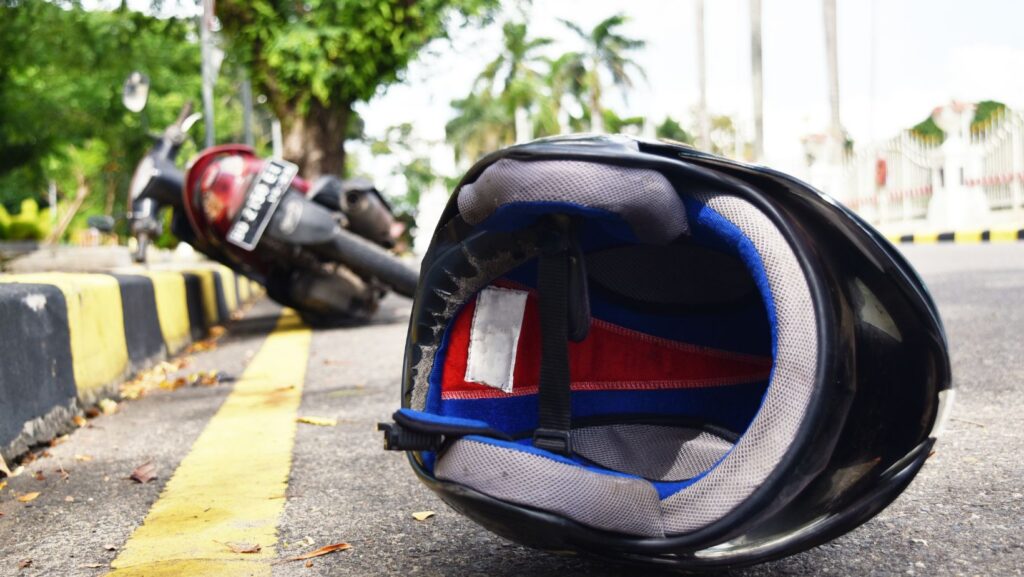
Head trauma is the number one killer in motorcycle crashes. A helmet provides a protective layer around the skull. This layer absorbs and disperses the energy of a blow.
Simple.
But the truth is… some helmets offer more protection than others.
Full-face helmets are the safest option. They cover the chin and the face in addition to the cranium. Open-face and half-helmets leave too much skin exposed.
When choosing a helmet, some of the features to look out for include:
- DOT certification – a label that proves the helmet has met federal safety standards
- Snug fit – nothing should shift when you put the helmet on
- Full-face design – a whole brain and face are better than half
- Quality materials – impact-resistant foam lining is essential
You don’t have to break the bank to get a good helmet. But cutting corners on head protection is never worth the risk.
Jackets and Body Armour
Road rash does not sound like much. It is.
Skin slapped against asphalt at speed does not end well. Abrasions can take skin grafts to repair. Scars can take a lifetime to fade.
This is why wearing a motorcycle jacket is essential. The best jackets are made of leather or other abrasion-resistant materials. Most have built-in armour at the shoulders, elbows, and back. This built-in protection stops bones and joints from being damaged when sliding on the road.
Here are some of the things to look for in a jacket:
- CE-rated armour – the European standard for impact
- Abrasion-resistant outer shell – either leather or reinforced textile
- Secure closures – zippers and straps that will stay put
- Visibility features – reflective strips and bright colours
It is common for riders to ditch the jacket on hot days. Don’t make this mistake. Even a mesh jacket with armour is better than bare skin.
Gloves: Protecting the Hands
If riders fall, they put their hands out to brace themselves. This often means the hands take the brunt of the impact.
Broken fingers, torn skin, and nerve damage are all possible. Wearing motorcycle gloves stops these injuries. Gloves offer features like:
- Hard knuckle protection
- Palm sliders to reduce friction
- Reinforced stitching
- Wrist closures for a secure fit
Gloves also give better grip on the handlebars. This is helpful for control in all weathers.
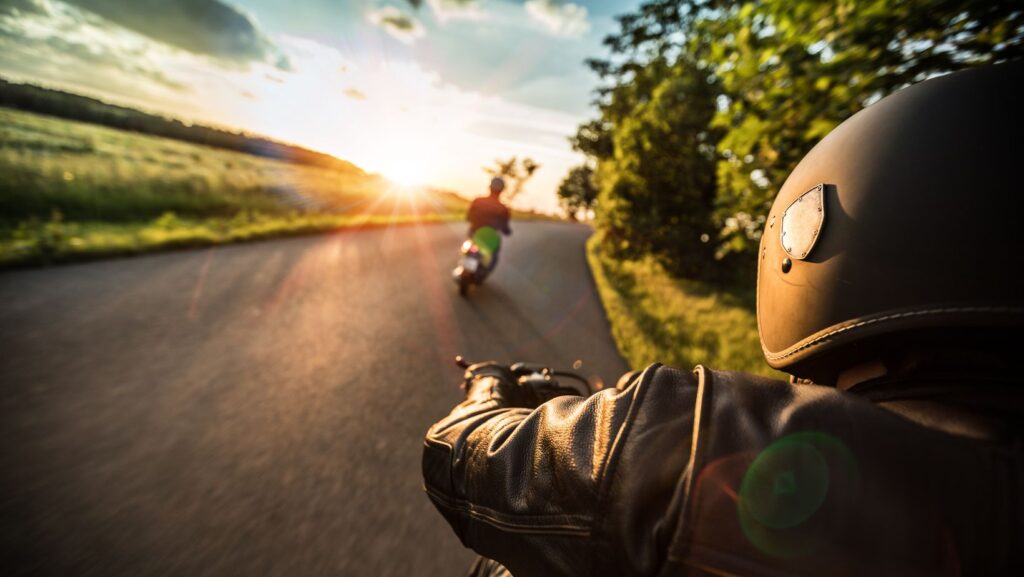
Boots: Ankle and Foot Protection
Feet and ankles are very vulnerable in a crash. Normal shoes simply can’t protect against crushing or scraping.
Motorcycle boots are made differently. Reinforced toe boxes, ankle armour, and non-slip soles are common. Shin guards are also very popular.
Features to consider when buying boots include:
- Ankle support – these prevent rolling and hyperextension
- Oil-resistant soles – grip better on slippery surfaces
- Sturdy construction – leather or reinforced synthetic material
- Secure closures – buckles or heavy-duty zippers
Boots should fit snugly but allow for movement. The aim is protection but without sacrificing comfort.
Visibility Gear: Being Seen Saves Lives
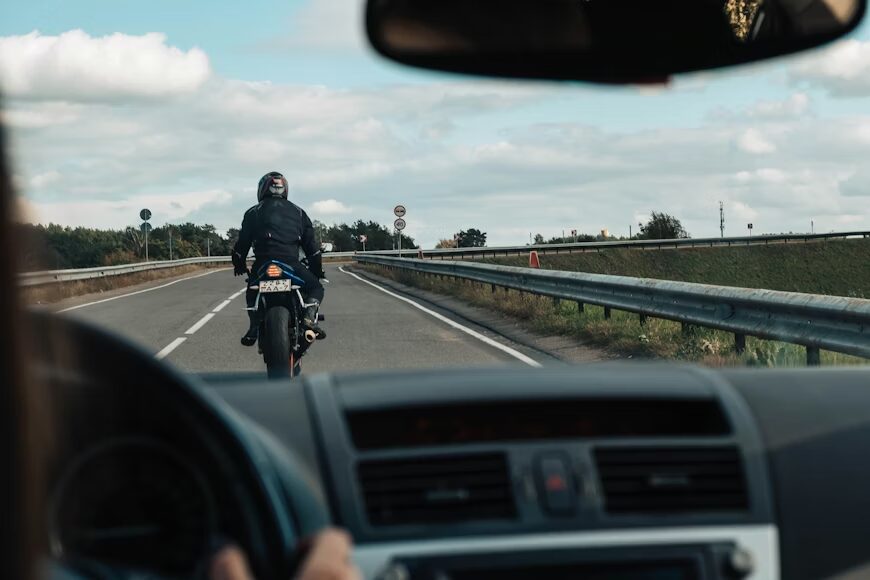
The biggest danger for riders is not the crash. It is being invisible in the first place.
Many motorcyclists have accidents because other drivers simply didn’t see them. Bright colours and reflective materials are a big help.
High-visibility vests or jackets are an option for riders. Helmets can also be fitted with reflective decals.
Riders can add reflective strips to boots and gloves. Most of these are velcro and take seconds to apply.
Visibility can be improved even further by adding LED lights to the bike.
It is not as cool as all-black leather and paint. But being visible to other drivers is one of the easiest ways to prevent an accident from happening.
Putting It All Together
The best safety strategy is to layer protection. Each item of gear addresses a different risk. Together, they make a complete system that can drastically reduce the likelihood of a severe injury.
See the logic here…
A helmet protects your head. A jacket protects your torso. Gloves protect your hands. Boots protect your feet. Visibility gear helps you not be hit in the first place.
None of these items are enough by themselves. But they work together to give you the best chance possible of getting through an accident.
Final Thoughts
Motorcycle riding will never be 100% safe. That’s part of the thrill of it.
But smart riders do not take their safety for granted. They invest in quality gear that they know works. They put it on for every ride, come rain or shine. And they appreciate that safety is always worth the effort.
There are some items of motorcycle protective gear that the statistics prove work better than others. The National Safety Council reports that helmets cut fatal injuries by 37% for riders and 41% for pillion passengers. That’s the proof.
So before you get on your bike, take a moment to check your gear situation. Is it all present and correct? Are there any pieces in need of replacement? If so, now is the time to do something about it.
Because the best ride is the one where you both arrive home safe.